

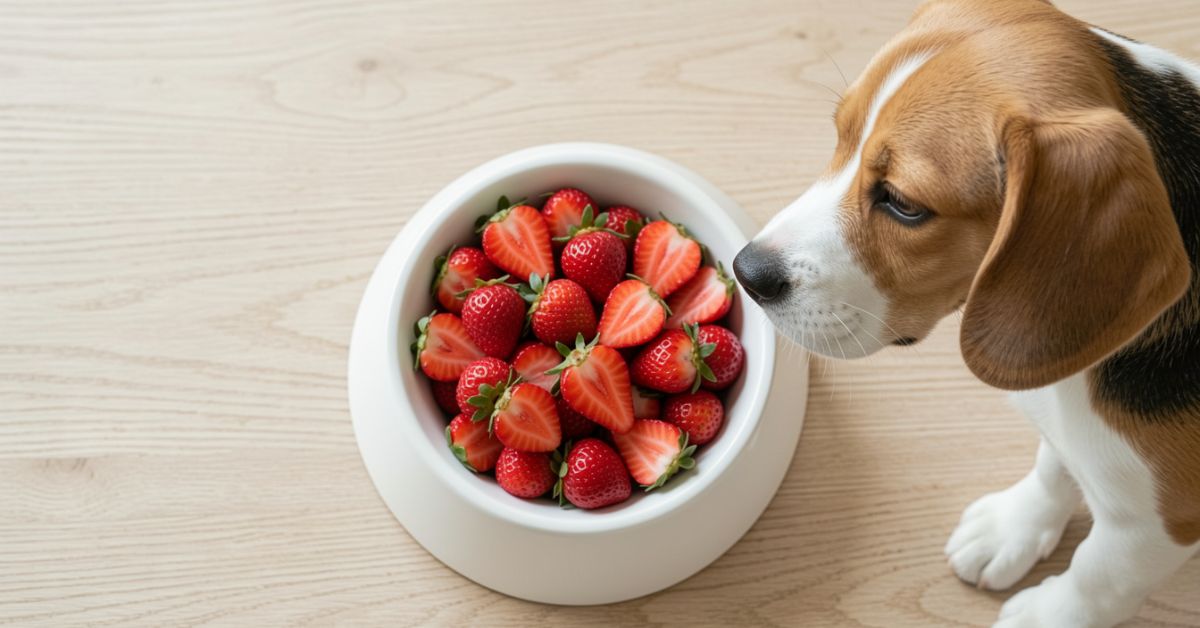
When summer arrives and strawberries are in full bloom, the question naturally arises for every dog owner: can dogs eat strawberries? The short answer is yes, dogs can safely eat strawberries. These juicy red berries are not only delicious but also packed with nutrients that can genuinely boost your dog’s health.
Many pet owners search “can dogs eat strawberries” every day and the answer is one of the most positive in our entire fruit safety series. However, like any treat, strawberries must be served the right way to avoid potential risks. As always, if your dog has any existing health conditions such as diabetes or kidney disease, consult your veterinarian before introducing any new food including strawberries. In this 2026 guide, we will explore the benefits, answer every trending question, and share our signature PetExpertly 5-Step Serving Guide.
Are Strawberries Good for Dogs? Nutritional Benefits

Strawberries are considered a canine superfood because they are low in calories and high in essential nutrients. Furthermore, just like we covered in our guide onCan Dogs Eat Blueberries?, berries offer unique antioxidants that support the immune system and fight inflammation.
Vitamin C for Immunity
Strawberries are a great source of Vitamin C, which helps in tissue repair and maintains a healthy immune system. While dogs naturally produce their own Vitamin C, an extra boost from fresh fruit can be especially beneficial for senior dogs experiencing inflammation or joint issues.
Rich in Fiber for Digestion
Fiber is essential for a healthy digestive tract. If your dog struggles with irregular bowel movements, a few pieces of strawberry can help keep things moving smoothly. In addition, the high water content in strawberries also helps prevent dehydration on hot summer days.
The Teeth Whitening Enzyme Malic Acid
Strawberries contain malic acid, a natural compound that may offer a minor natural teeth-cleaning effect by helping to break down surface plaque. However, this is a very subtle benefit and should never replace regular brushing or professional dental cleaning. Think of it as a small natural bonus, not a dental treatment.
Weight Management
Since strawberries are high in water content and relatively low in sugar compared to other fruits, they make an excellent treat for dogs on a diet. For more low-calorie fruit options, check out our complete guide on Can Dogs Eat Watermelon?
What Makes Strawberries Unique Compared to Other Dog-Safe Fruits?
Unlike bananas which are high in potassium but also high in sugar, strawberries offer a rare combination: high antioxidants AND a low glycemic index. This means they cause a slower rise in blood sugar compared to most fruits, making them one of the safest fruit choices for most dogs.
According to research published in the Journal of Agricultural and Food Chemistry, strawberries rank among the top fruits for antioxidant capacity higher than mangoes and bananas. For dogs, this means better cellular protection and reduced inflammation over time. This is what separates strawberries from most other treats and makes them a genuinely smart addition to your dog’s diet.
Safe Serving Size by Dog Size
Even healthy treats must follow the 10% rule. Treats should never exceed 10% of your dog’s daily calorie intake. Use this table as your quick reference:
| Dog Size | Weight | Recommended Serving |
| Extra Small (Chihuahua) | 2 to 3 kg | 1 small slice |
| Small (Pug, Beagle) | 5 to 10 kg | 2 to 3 small slices |
| Medium (Bulldog) | 15 to 25 kg | 4 to 5 slices |
| Large (German Shepherd) | 30 to 40 kg | A small handful |
| Giant (Mastiff) | 45+ kg | Up to half a cup |
Can Dogs Eat Strawberry Tops? The Safety Concern
A very common Google search is “can dogs eat strawberry tops?” While the green leaves and stems are not technically toxic, they are not recommended for dogs. The tops are fibrous and tough, making them very difficult for a dog’s digestive system to break down. In small breeds, strawberry tops can even present a minor choking hazard or cause gastrointestinal blockage.
Pro Tip: Always remove the green stem completely before serving the berry to your dog.
Can Puppies Eat Strawberries?

Yes, puppies can eat strawberries, but with extra caution. Puppies have more sensitive digestive systems than adult dogs and their throats are smaller, making choking a real concern. Therefore, extra care must be taken when introducing any new fruit to a young puppy.
When introducing strawberries to a puppy:
- Start with a very small piece, about the size of a fingernail
- Monitor for any signs of upset stomach or diarrhea for 24 hours
- Avoid feeding daily until they reach at least 6 months of age
- Always cut into tiny pieces and never serve whole
- If in doubt, consult your vet before introducing strawberries to puppies under 3 months old
Allergy Warning Important for First-Time Strawberry Feeders
Although strawberries are generally safe for dogs, some dogs can develop an allergic reaction to berries. The first time you introduce strawberries to your dog, start with just one small piece and monitor them closely for the next 2 hours. We strongly recommend consulting your vet if your dog has a history of food allergies before trying any new fruit.
Signs of an allergic reaction include:
- Itching or excessive scratching
- Swelling around the face or muzzle
- Hives or skin redness
- Difficulty breathing
If you notice any of these signs, stop feeding strawberries immediately and contact your vet. Allergic reactions are rare but possible, therefore always introduce any new food slowly and in small amounts.
The PetExpertly 5-Step Safe Serving Guide
To ensure your dog gets the most out of this treat without any risk, follow these five preparation steps used across all our PetExpertly fruit guides:
Step 1 Thorough Washing: Always wash strawberries under cold running water to remove pesticides, dirt, or residual chemicals that can harm your dog. Organic strawberries are preferable but still require washing.
Step 2 Remove the Tops: Pull off the green leaves and stems completely. These offer no nutritional value and are hard to digest.
Step 3 Slicing and Dicing: Never give a whole strawberry to a small dog. Slice into bite-sized pieces to prevent choking. For large dogs, halves are perfectly fine.
Step 4 Check for Mold: Dogs are very sensitive to moldy fruit. Inspect every berry before serving. If it looks soft, mushy, or has white spots, throw it away immediately.
Step 5 Serve in Moderation: Follow the 10% rule. Strawberries are a treat, not a meal. Use the serving size table above as your guide.
DIY Recipe 1: The Strawberry Ice-Cooler
Perfect for hot summer days, this frozen treat takes only 5 minutes to prepare:
Ingredients:
- 1 cup fresh strawberries (washed, tops removed)
- Half a cup of plain, unsweetened yogurt (check label for no Xylitol)
- A splash of coconut water (no added sugar)
Method:
- Blend all ingredients together until smooth
- Pour into ice cube trays
- Freeze for at least 4 hours
- Serve one cube at a time as a refreshing summer snack
DIY Recipe 2: Strawberry and Banana Dog Bowl Topper
Ingredients:
- 3 fresh strawberries (washed, tops removed)
- Half a ripe banana
- 1 tablespoon plain, unsweetened peanut butter (check label no Xylitol)
Method:
- Mash strawberries and banana together with a fork
- Add peanut butter and mix well
- Spoon a small amount on top of your dog’s regular meal
- Store remaining mixture in the fridge for up to 2 days
Warning: Avoid Canned Strawberries and Xylitol
This is a critical safety point that many pet owners miss. Never feed your dog canned strawberries. Canned fruits are packed in heavy syrups containing massive amounts of sugar. More dangerously, some sugar-free canned products contain Xylitol, an artificial sweetener that is extremely toxic to dogs. According to PetMD’s Toxic Food Guide, Xylitol can cause liver failure or seizures within 30 minutes of ingestion. Always read labels carefully and stick to fresh, plain strawberries only.
Frequently Asked Questions (FAQs)
1. Can dogs eat strawberries every day? While safe, it is better to rotate fruits. Daily consumption in large amounts can cause diarrhea due to the high natural sugar and fiber content. If you gave strawberries today, try mangoes orapples tomorrow for variety.
2. Can dogs eat strawberries with sugar? No. Never feed your dog strawberries sprinkled with sugar or dipped in chocolate. Excess sugar causes obesity, dental issues, and diabetes over time. Always stick to plain, fresh strawberries.
3. Can dogs eat strawberries and bananas together? Yes! A mix of strawberries and bananas is a healthy, potassium-rich snack. Many owners mash them together to create a nutritious DIY dog bowl topper as shown in our recipe above.
4. Can dogs eat strawberries raw? Absolutely. Raw, fresh strawberries are the best way for your dog to absorb all the vitamins and natural enzymes. Cooking destroys many of the beneficial nutrients.
5. Can dogs eat strawberry tops? No. Always remove the green leaves and stem. They are fibrous, hard to digest, and can be a choking hazard for small dogs.
6. Are strawberries safe for diabetic dogs? Consult your vet first. Strawberries contain natural fructose which can affect blood sugar levels. According to AKC Expert Advice, diabetic dogs should only have fruits approved by their veterinarian.
7. Can dogs eat frozen strawberries? Yes, plain frozen strawberries are safe and make a great summer treat. Just ensure they are cut into small pieces to prevent choking and always check labels for added sugar or sweeteners.
Conclusion
So, can dogs eat strawberries? Absolutely yes. Strawberries are one of the healthiest, most refreshing treats you can share with your dog during the summer months. By following our 5-step serving guide, removing the tops, and always choosing fresh over canned, you can safely add this superfood to your dog’s treat rotation.
Remember the 10% rule, watch for allergic reactions the first time you serve them, and consult your vet if your dog has any existing health conditions. In summary, a little preparation goes a long way in keeping your dog safe, healthy, and happy.
For more expert-approved fruit guides, explore our complete series:
- Can Dogs Eat Watermelon?
- Can Dogs Eat Apples?
- Can Dogs Eat Mango?
- Can Dogs Eat Blueberries?
- Can Dogs Eat Grapes? (TOXIC — Never Feed)
- Can Dogs Eat Cucumber?
Did your dog enjoy strawberries this summer? Share your experience in the comments below we read every one!

Farhan Imran is the founder and lead editor of PetExpertly. With a background in managing pet-focused digital platforms like PurePawsLife, he is dedicated to researching and sharing the most reliable pet care advice. His goal is to help pet owners make informed decisions through well-researched guides