

If you are wondering, ‘Can dogs eat chocolate?’, the short answer is absolutely not.
Medically Reviewed by Dr. Sarah Mitchell, DVM Small Animal Veterinarian, 12 years clinical experience | Last Updated: May 2026
About the Reviewer: Dr. Sarah Mitchell, DVM, is a small animal veterinarian with over 12 years of clinical experience. She specializes in preventive care and canine nutrition, and regularly advises pet owners on safe human foods for dogs. [View Dr. Mitchell’s credentials →]

You are unwrapping a chocolate bar and your dog is right there, watching your every move. It is tempting to share a little piece, especially when they are being so patient. However, when it comes to chocolate, this is one treat that must never make its way into your dog’s mouth.
Can dogs eat chocolate? Absolutely not. Chocolate is one of the most dangerous and commonly ingested toxins for dogs. Unlike grapes or xylitol which are less commonly found in homes, chocolate is everywhere — in kitchens, handbags, holiday baskets, and children’s lunch boxes.
“Chocolate toxicity is one of the most common emergency calls we receive, especially around Halloween and Christmas. Even a small amount can trigger serious symptoms in a small dog, and every dog owner needs to know exactly what to do.” Dr. Sarah Mitchell, DVM
In this 2026 vet-backed guide, we cover everything from why chocolate is toxic to dogs, which types are most dangerous, what symptoms to watch for, what treatment looks like at the vet, and the exact emergency steps to take if your dog eats chocolate.
Why is Chocolate Toxic to Dogs? The Science Explained
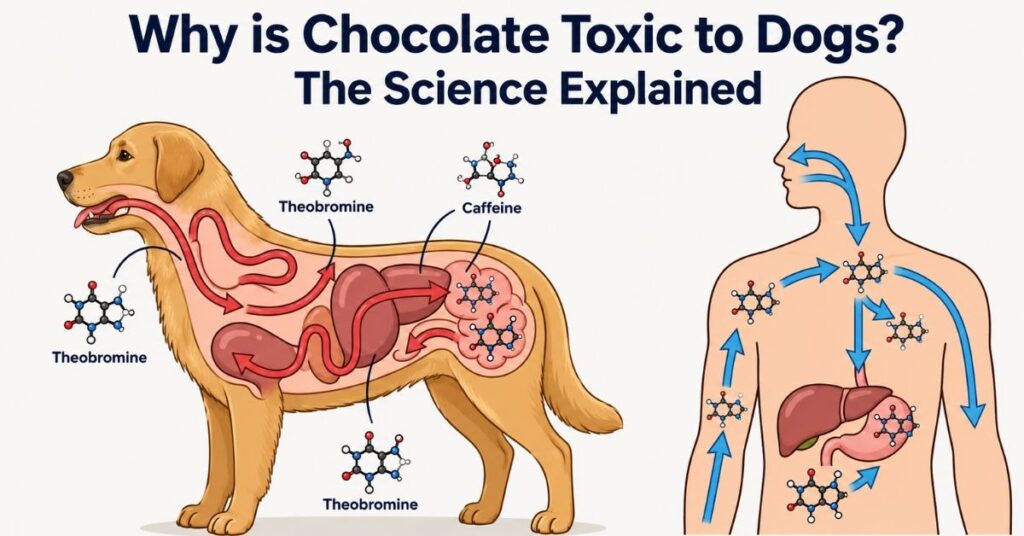
Chocolate contains two compounds that make it toxic to dogs: Theobromine and Caffeine. Together, these are known as methylxanthines.
While humans can metabolise theobromine and caffeine relatively quickly, a dog’s body processes these compounds much more slowly. This causes a dangerous buildup
of toxic levels in their system even from small amounts. According to AKC Expert Advice, chocolate toxicity can cause a serious medical emergency depending on the type and amount consumed and the size of the dog.
Theobromine directly stimulates a dog’s heart and nervous system, which is why symptoms like abnormal heart rate, hyperactivity, and seizures develop rapidly after ingestion.
Chocolate Toxicity Levels Which Type is Most Dangerous?
Not all chocolate is equally dangerous. The darker and more bitter the chocolate, the higher the theobromine content and the more dangerous it is.
| Chocolate Type | Theobromine Level | Danger Level |
| Cocoa Powder | Highest | 🔴 Extremely Dangerous |
| Baking Chocolate | Very High | 🔴 Extremely Dangerous |
| Dark Chocolate | High | 🔴 Very Dangerous |
| Milk Chocolate | Medium | 🟡 Dangerous |
| White Chocolate | Very Low | 🟡 Still Risky |
Important: White chocolate contains very little theobromine but is extremely high in fat and sugar, which can cause pancreatitis and severe digestive upset. No type of chocolate is safe for dogs.
How Much Chocolate is Dangerous? Toxicity by Dog Size
The toxic dose of theobromine varies by the dog’s weight and the type of chocolate consumed.
| Dog Size | Weight | Dangerous Amount (Milk Chocolate) | Dangerous Amount (Dark Chocolate) |
| Extra Small | 2 to 5 kg | 30g or more | As little as 5g |
| Small | 5 to 10 kg | 60g or more | As little as 10g |
| Medium | 15 to 25 kg | 150g or more | As little as 25g |
| Large | 30 to 40 kg | 250g or more | As little as 40g |
| Giant | 45+ kg | 350g or more | As little as 55g |
Pro Tip: Use the VetsNow Chocolate Toxicity Calculator to get an accurate risk assessment based on your dog’s exact weight and the chocolate type they consumed.
Symptoms to Watch if Your Dog Ate Chocolate
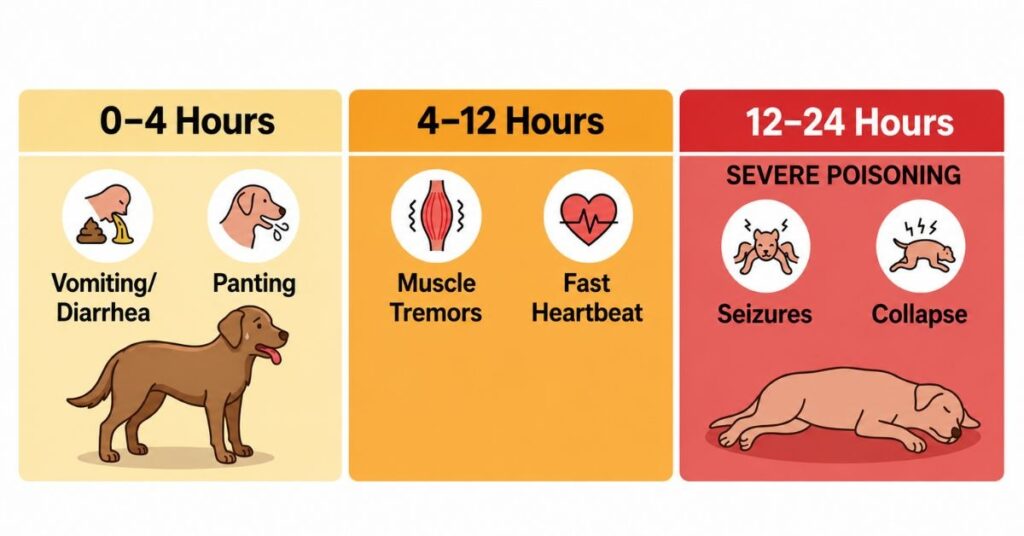
Symptoms typically appear within 2 to 4 hours of ingestion but can be delayed up to 12 hours. Knowing the timeline can save your dog’s life.
Within 2 to 4 Hours:
- Vomiting and diarrhea
- Excessive thirst and urination
- Restlessness and hyperactivity
- Panting or rapid breathing
4 to 12 Hours:
- Muscle tremors or twitching
- Elevated heart rate
- High blood pressure
- Abdominal bloating and pain
12 to 24 Hours Severe Poisoning:
- Seizures
- Irregular heartbeat
- Collapse or loss of consciousness
- In extreme cases, death
According to PetMD, symptoms of chocolate poisoning can develop even if your dog has only eaten a small amount. Every minute matters, do not wait for symptoms to appear.
Emergency Steps My Dog Ate Chocolate. What Do I Do?
Act immediately even if your dog seems fine. Do not wait for symptoms to appear. Here is exactly what to do:
1: Stay calm but act immediately.
2: Note the following before calling the vet:
- What type of chocolate was eaten (dark, milk, white, baking)
- How much was eaten (approximate grams or number of pieces)
- Your dog’s exact weight
- Exactly when they ate it
3: Call one of these 24/7 emergency hotlines immediately:
🚨 ASPCA Animal Poison Control: ☎️(888) 426-4435 (A $95 consultation fee may apply)
🚨 Pet Poison Helpline: ☎️(855) 764-7661 (Use this if ASPCA line has a long wait)
4: Do NOT induce vomiting unless your vet specifically instructs you to.
5: Do NOT give any home remedies milk, water, or bread will not neutralize chocolate toxicity.
6: Take your dog to an emergency vet immediately if symptoms appear or if a large amount was consumed.
Pro Tip: Use the VetsNow Chocolate Toxicity Calculator while waiting for the vet to call back. It gives an instant risk assessment.
What Will the Vet Do? Understanding Treatment
Many dog owners arrive at the emergency clinic not knowing what to expect. Here is exactly what veterinary treatment for chocolate poisoning looks like:
1. Assessment & Triage Your vet will ask for the information you gathered (chocolate type, amount, dog’s weight, time of ingestion). They will quickly assess your dog’s condition heart rate, blood pressure, breathing, and neurological state.
2. Inducing Vomiting (if caught early) If your dog ate the chocolate within the last 1 to 2 hours and shows no severe symptoms, the vet may administer a medication to induce vomiting to remove as much chocolate from the stomach as possible. Do not attempt this at home vomiting must be medically supervised to prevent aspiration.
3. Activated Charcoal After vomiting (or if vomiting is not appropriate), the vet may give activated charcoal orally. This binds to remaining theobromine in the gut and prevents further absorption into the bloodstream.
4. IV Fluids Intravenous fluids help flush theobromine from the body faster, maintain hydration, and stabilize blood pressure. This is one of the most important parts of treatment for moderate to severe cases.
5. Cardiac Monitoring Because theobromine directly affects the heart, your dog will be placed on a heart monitor. If an abnormal heart rhythm (arrhythmia) is detected, the vet may administer medications to stabilize it.
6. Anti-seizure Medication In severe cases where seizures occur, the vet will administer anticonvulsant medications such as diazepam (Valium) to control them.
7. Hospitalization Depending on the severity, your dog may need to stay overnight for monitoring and continued IV fluids. Most dogs that receive prompt treatment recover fully within 24 to 72 hours.
Recovery outlook: According to VCA Animal Hospitals, the prognosis for chocolate toxicity is good when treated early. Dogs that receive prompt veterinary care typically make a full recovery.
Holiday Warning The Most Dangerous Times of Year
Chocolate poisoning in dogs spikes dramatically during these periods:
- Halloween candy bags, chocolate treats left within reach
- Christmas chocolate advent calendars, gift boxes, Christmas pudding
- Easter chocolate eggs hidden around the house
- Valentine’s Day dark chocolate boxes and truffles
How to protect your dog during holidays:
- Keep all chocolate in sealed containers in high cupboards completely out of reach
- Inform guests and children never to feed chocolate to your dog
- Teach your dog the “leave it” command as a preventive measure
- After events, do a thorough sweep of the floor before letting your dog roam free
- Consider a baby gate to restrict access to rooms where chocolate is present
Print or screenshot our emergency checklist below and keep it on your fridge especially during the holiday season.
Emergency Fridge Checklist Save This
☐ What type of chocolate? (dark / milk / white / baking / cocoa powder)
☐ How much was eaten? (grams or pieces)
☐ My dog’s weight: _______ kg
☐ Time they ate it: _______
☐ ASPCA Poison Control: (888) 426-4435
☐ Pet Poison Helpline: (855) 764-7661
☐ My nearest emergency vet: _______________________
☐ Do NOT induce vomiting without vet instruction
☐ Do NOT give milk, water, or bread as a remedy
Common Chocolate Products That Are Dangerous
Many dog owners do not realize how many everyday foods contain chocolate. Watch out for:
- Chocolate chip cookies and brownies
- Hot cocoa or chocolate milk
- Chocolate flavoured protein bars
- Cocoa powder used in baking
- Chocolate-covered nuts or raisins (double danger raisins are also toxic to dogs)
- Chocolate ice cream (also often contains Xylitol)
- Mocha or coffee-flavoured products
Safe Chocolate Alternatives for Dogs

Just because chocolate is off the menu does not mean your dog cannot enjoy a sweet treat. Here are vet-approved, dog-safe alternatives:
- Banana slices — naturally sweet and potassium-rich. [See our full guide →]
- Strawberries — low in calories and contain malic acid. [See our full guide →]
- Apple slices — crunchy and fiber-rich (no seeds). [See our full guide →]
- Blueberries — antioxidant powerhouse. [See our full guide →]
- Carob dog treats — a dog-safe chocolate substitute available in pet stores
FQAS
1. Can dogs eat white chocolate? White chocolate contains very little theobromine but is extremely high in fat and sugar. While it is less immediately toxic than dark chocolate, it can still cause severe digestive upset, vomiting, and pancreatitis. No type of chocolate is safe for dogs.
2. What happens if a dog eats a small piece of chocolate? It depends on the dog’s size and the type of chocolate. A small piece of milk chocolate may only cause mild stomach upset in a large dog, but the same amount could trigger serious symptoms in a small dog. Always contact your vet immediately rather than waiting to see what happens.
3. Can dogs eat chocolate ice cream? No. Chocolate ice cream contains theobromine from the chocolate and often contains Xylitol, an artificial sweetener that is extremely toxic to dogs. It is also very high in sugar and fat, which can cause pancreatitis.
4. How long after eating chocolate will a dog get sick? Symptoms typically appear within 2 to 4 hours but can be delayed up to 12 hours. Do not wait for symptoms to contact your vet immediately after your dog eats any amount of chocolate.
5. Can dogs recover from chocolate poisoning? Yes, if treated quickly. Dogs that receive prompt veterinary treatment typically recover fully within 24 to 72 hours. However, severe cases involving large amounts of dark chocolate or cocoa powder can be fatal without immediate treatment.
6. Is carob safe for dogs? Yes! Carob is a dog-safe chocolate substitute that looks and tastes similar to chocolate but contains no theobromine or caffeine. Many pet stores sell carob-based dog treats as a safe alternative.
7. What should I do if my dog ate a chocolate-covered raisin? This is a double emergency. Both chocolate AND raisins are toxic to dogs. Contact your vet or ASPCA Poison Control at(888) 426-4435 immediately. Do not wait for symptoms.
8. How do vets treat chocolate poisoning? Treatment depends on the severity but typically includes inducing vomiting (if caught early), administering activated charcoal, IV fluids, heart monitoring, and anti-seizure medication if needed. Most dogs recover fully with prompt treatment. See our fullWhat Will the Vet Do? section above.
9. Can I make my dog vomit at home if they ate chocolate? No. Do not attempt to induce vomiting at home without direct instruction from your vet. Incorrect attempts can cause your dog to inhale vomit into their lungs (aspiration), which can be life-threatening. Always call your vet or poison control first.
Conclusion
Can dogs eat chocolate? Absolutely not, not even a small piece. Chocolate is one of the most dangerous foods for dogs, containing theobromine and caffeine that their bodies cannot safely process. The darker the chocolate, the more dangerous it is.
If your dog eats chocolate, act immediately. Call (888) 426-4435 or (855) 764-7661 and follow our emergency steps above. Quick action saves lives.
Save the emergency checklist above to your phone or print it for your fridge especially before the holiday season.
Explore more in our safe foods series:
- Can Dogs Eat Bananas?
- Can Dogs Eat Strawberries?
- Can Dogs Eat Apples?
- Can Dogs Eat Blueberries?
- Can Dogs Eat Grapes? (TOXIC — Never Feed)
- Can Dogs Eat Mango?
- Can Dogs Eat Cucumber?
Did this guide help you? Share it with a fellow dog owner it could save a life! Drop your questions in the comments below.

Farhan Imran is the founder and lead editor of PetExpertly. With a background in managing pet-focused digital platforms like PurePawsLife, he is dedicated to researching and sharing the most reliable pet care advice. His goal is to help pet owners make informed decisions through well-researched guides