

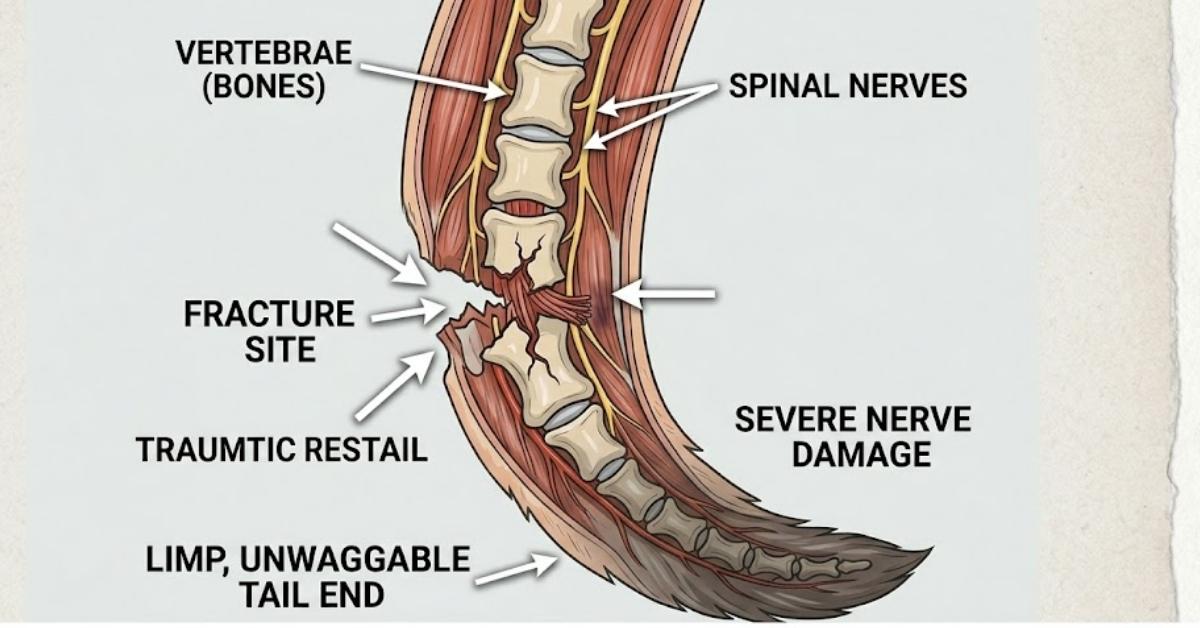
Can a dog break its tail? The answer is yes — and it happens more often than most owners realise. As a dog owner, you know that your dog’s tail is far more than just a wagging tool. It is a vital part of their anatomy used for balance, communication, and even swimming. However, because the tail is so active and exposed, it is highly prone to injuries. In this 2026 guide, we cover everything from anatomy and causes to treatment options and home recovery tips.
Disclaimer: This article is for informational purposes only and does not replace professional veterinary advice. If your dog is in pain or distress, contact your nearest vet clinic immediately.
Understanding the Anatomy of a Dog’s Tail
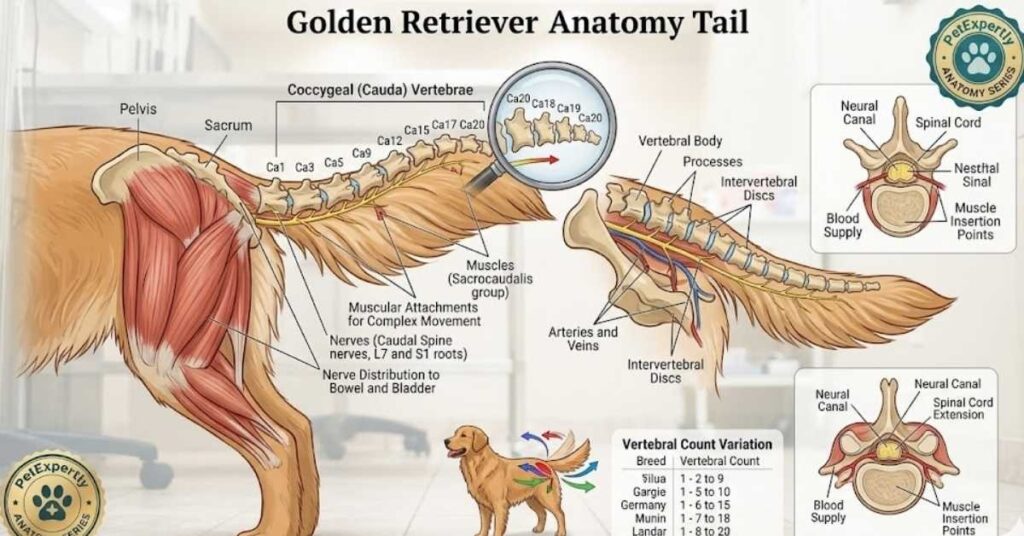
Before identifying an injury, it helps to understand what is inside that wagging tail. A dog’s tail consists of several key components:
Vertebrae: Usually 5 to 20 small bones that gradually get smaller toward the tip. These are the bones most vulnerable to fracture.
Muscles: These allow for the complex movements, directional wags, and emotional expressions your dog uses every day.
Nerves: Highly sensitive nerves run through the tail and send signals directly to the brain. Damage to these nerves can affect bladder and bowel control.
Blood Vessels: These supply nutrients to the tail tissue and help regulate temperature.
Because the tail is essentially an extension of the spinal cord, an injury near the base of the tail can sometimes lead to serious neurological issues beyond just pain. According to the American Kennel Club, the tail is a direct extension of the spine and any injury to it should be taken seriously immediately.
Common Causes: How Do Dogs Break Their Tails?
Tail fractures happen more often than most owners expect. Some breeds are more susceptible due to their size, activity level, or tail length.
1. The Door Slam Accident This is the most frequent cause of tail injuries. A dog tries to rush through a closing door and the tail gets caught in the frame. Depending on the force of impact, this can cause a simple hairline fracture or a severe degloving injury where the skin is stripped away from the bone entirely.
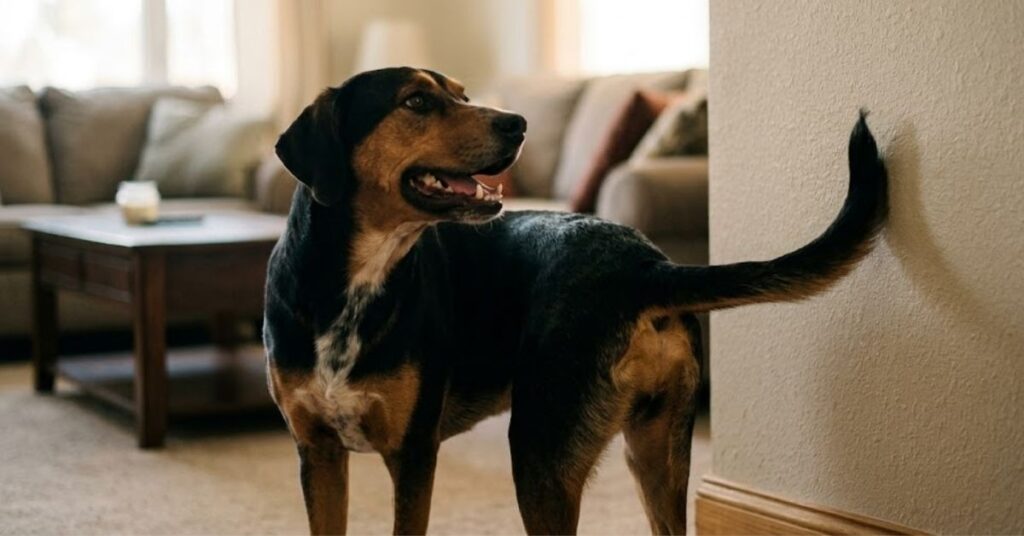
2. Happy Tail Syndrome While the name sounds cheerful, Happy Tail Syndrome is a genuinely painful condition. It occurs when a dog wags its tail so enthusiastically against a hard surface such as a wall, furniture, or metal crate that repeated impact causes bleeding, bruising, and eventually bone trauma. This condition is especially common in larger breeds like Labradors, Boxers, and Great Danes whose tails hit surfaces with significant force.
3. Being Stepped On In busy households, small dogs and puppies often have their tails accidentally stepped on. While it may seem like a minor incident, the full weight of an adult human can easily crush the delicate vertebrae near the tip of a small dog’s tail.
4. Being Pulled or Grabbed Children or other animals sometimes grab a dog’s tail, which can cause dislocation or tearing of the muscles and tendons surrounding the vertebrae. Even a single forceful pull can result in a serious injury.
5. Road Accidents or Falls High-impact accidents such as being struck by a vehicle or falling from a height can cause multiple fractures along the tail simultaneously. These cases are almost always medical emergencies.
7 Signs a Dog Can Break Its Tail Warning Signals to Watch
Knowing the difference between a minor bruise and a full fracture is essential. Look for these specific warning signs:
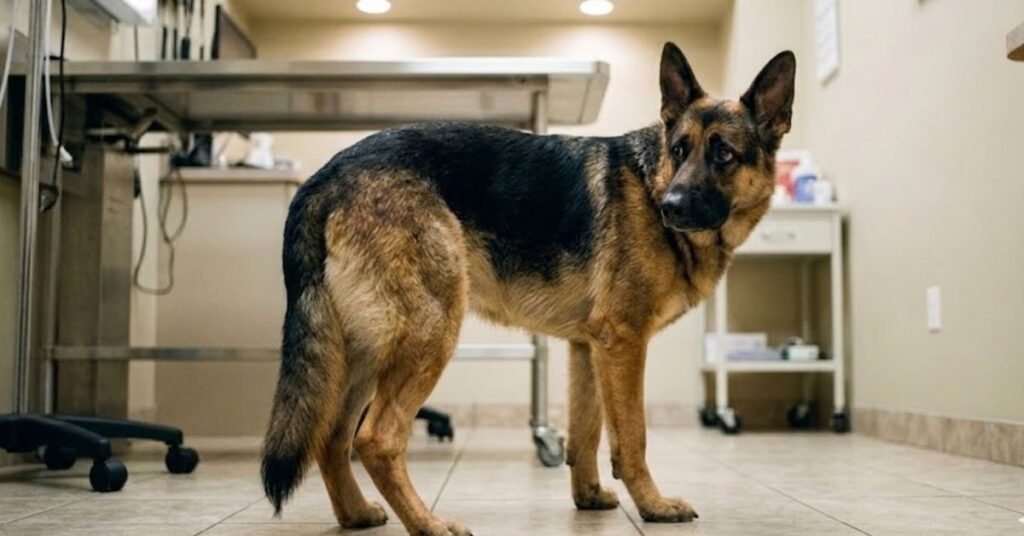
1. A Limp or Hanging Tail If your dog’s tail is hanging completely down and they are unable to lift or wag it, this is one of the clearest signs of a serious injury.
2. Swelling and Inflammation The area around the break will often swell quickly. Run your hand gently along the tail and feel for any unusual lumps or heat.
3. A Kinked or Bent Appearance A visible bend, kink, or V-shape in the tail where none existed before is a strong indicator of a fracture or dislocation.
4. Pain Response and Aggression Even the friendliest, most gentle dog may growl, snap, or pull away if you try to touch their injured tail. This pain response should never be ignored.
5. Difficulty Walking or Loss of Balance Since the tail plays a role in balance and coordination, a broken tail can cause your dog to walk awkwardly, stumble, or seem unsteady on their feet.
6. Whining, Panting, or Restlessness These are signs of acute pain and distress. If your dog cannot settle and keeps whining without an obvious reason, check the tail carefully.
7. Obsessive Licking or Chewing Dogs instinctively try to soothe pain by licking the affected area. If your dog is constantly focused on their tail, something is wrong.
If your dog is showing multiple of these signs simultaneously, do not wait. Contact your vet immediately.
Can a Dog Break Its Tail? Here Is How Vets Diagnose It
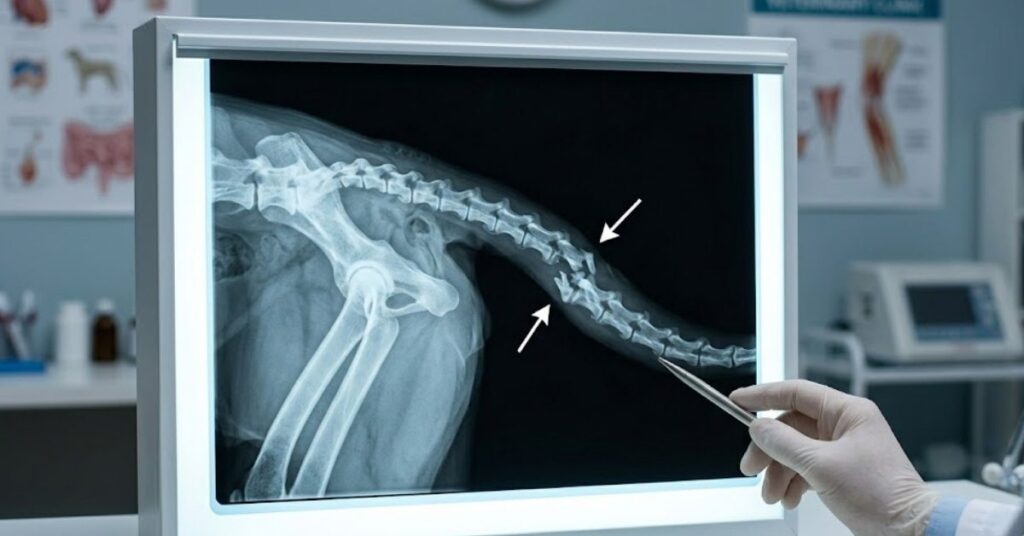
If you suspect a break, do not attempt to splint the tail yourself at home. According to the Merck Veterinary Manual improper handling of spinal extensions can lead to permanent nerve damage and worsened injuries.
Many owners wonder can a dog break its tail after a door accident — the answer is yes, and X-rays are the only way to confirm it.
What the Vet Will Do:
Physical Examination: The vet will carefully assess the tail’s range of motion, check for sensitivity, and observe your dog’s pain response.
X-Rays: This is the only reliable way to confirm whether the bone is fractured, dislocated, or simply bruised. Never assume the injury is minor without an X-ray.
Neurological Testing: If the break is near the base of the tail, the vet will check for nerve damage by testing reflexes and bladder control, as nerve damage in this area can affect your dog’s ability to urinate or defecate normally.
Treatment Options by Injury Location
The treatment depends entirely on the location and severity of the break. Here is a complete breakdown:
| Injury Location | Common Treatment | Recovery Time |
| Tip of the Tail | Pain medication, rest | 2 to 3 weeks |
| Middle of the Tail | Splint or bandage, sedation | 3 to 6 weeks |
| Base of the Tail | Surgery or amputation possible | 6 to 12 weeks |
| Degloving Injury | Wound care, antibiotics, surgery | 6 to 12 weeks |
Important: Never attempt home splinting. An incorrectly applied splint can cut off blood supply and cause tissue death in the tail.
Recovery and Home Care Tips

Recovering from a broken tail typically takes between 3 to 6 weeks depending on the severity. During this recovery period, your job as an owner is to keep your dog calm, comfortable, and safe.
Understanding can a dog break its tail helps owners act quickly and avoid long-term complications.
Restrict Activity Completely No running, jumping, or rough play during recovery. Use a leash even in the garden to prevent sudden bursts of energy that could re-injure the tail.
Use an Elizabethan Collar The cone of shame serves an important purpose it prevents your dog from chewing or licking their bandages, which can introduce infection into the wound site.
Monitor the Injury Daily Check the tail every day for signs of infection such as discharge, unusual smell, increased redness, or swelling. If any of these appear, contact your vet immediately.
Keep the Area Clean and Dry When bathing your dog during recovery, keep the injured tail completely dry. Moisture around a wound or splint can cause bacterial growth and slow healing significantly.
Provide Healthy, Nutritious Treats Keeping your dog mentally stimulated while physically restricted is important for their wellbeing. Offer safe, healthy treats to keep them occupied. For ideas on safe fruit treats, check out our guides on Can Dogs Eat Apples? and Can Dogs Eat Watermelon?
Follow All Vet Instructions Complete any prescribed course of antibiotics or pain medication even if your dog appears to feel better before the course ends.
Frequently Asked Questions (FAQs)
1. Can a dog still wag its tail if it is broken? In many cases, no. However, if the fracture is near the very tip of the tail, the dog may still be able to move the base slightly. Any reduction in normal tail movement should be investigated by a vet.
2. Will a broken tail heal on its own without a vet? Minor tip fractures may partially heal on their own, but they often heal crookedly and cause long-term discomfort. Base injuries will not heal correctly without veterinary intervention and can cause paralysis or permanent loss of bladder control.
3. How much does it cost to treat a broken dog tail? A basic examination typically costs between $50 and $150. X-rays add $100 to $300. Surgery or amputation can range from $500 to $1,500 depending on your location and the severity of the injury. According to PetMD’s veterinary cost guide, pet insurance can significantly reduce these expenses.
4. Can a broken tail cause paralysis? Yes, particularly if the fracture is at the base of the tail near the spine. Nerve damage in this area can affect bladder and bowel function and in severe cases can cause partial hind leg paralysis.
5. How long does a broken dog tail take to heal? Most tail fractures heal within 3 to 6 weeks with proper rest and veterinary care. Base fractures or those requiring surgery may take up to 12 weeks for full recovery.
6. Should I take my dog to an emergency vet for a broken tail? If the tail is severely bent, bleeding heavily, or if your dog cannot walk properly, yes treat it as an emergency. If the injury appears minor with no bleeding or neurological symptoms, call your regular vet first thing in the morning.
7. Can tail injuries be prevented? Yes. Be mindful of closing doors slowly, supervise interactions between children and dogs, and provide adequate space for large-tailed breeds to move freely without hitting hard surfaces.
The most common question we receive is: can a dog break its tail from being stepped on? Yes, especially in small breeds and puppies.
Conclusion
So, can a dog break its tail? Absolutely yes and it is more common than most owners realise. From door slam accidents to Happy Tail Syndrome, tail fractures can happen to any dog of any breed or size. The key is to recognize the 7 warning signs early. Seek veterinary care right away. Follow a proper home recovery plan.
Never attempt to diagnose or treat a broken tail at home. In summary, quick action and proper veterinary care give your dog the best chance of a full, pain-free recovery.
For more expert pet health guides, explore our complete series:
- Can Dogs Eat Apples?
- Can Dogs Eat Watermelon?
- Can Dogs Eat Mango?
- Can Dogs Eat Grapes? (TOXIC Never Feed)
- Can Dogs Eat Cucumber?
Did this guide help you? Sharing it with a fellow dog owner could make a real difference! Drop your questions in the comments below.

Farhan Imran is the founder and lead editor of PetExpertly. With a background in managing pet-focused digital platforms like PurePawsLife, he is dedicated to researching and sharing the most reliable pet care advice. His goal is to help pet owners make informed decisions through well-researched guides