
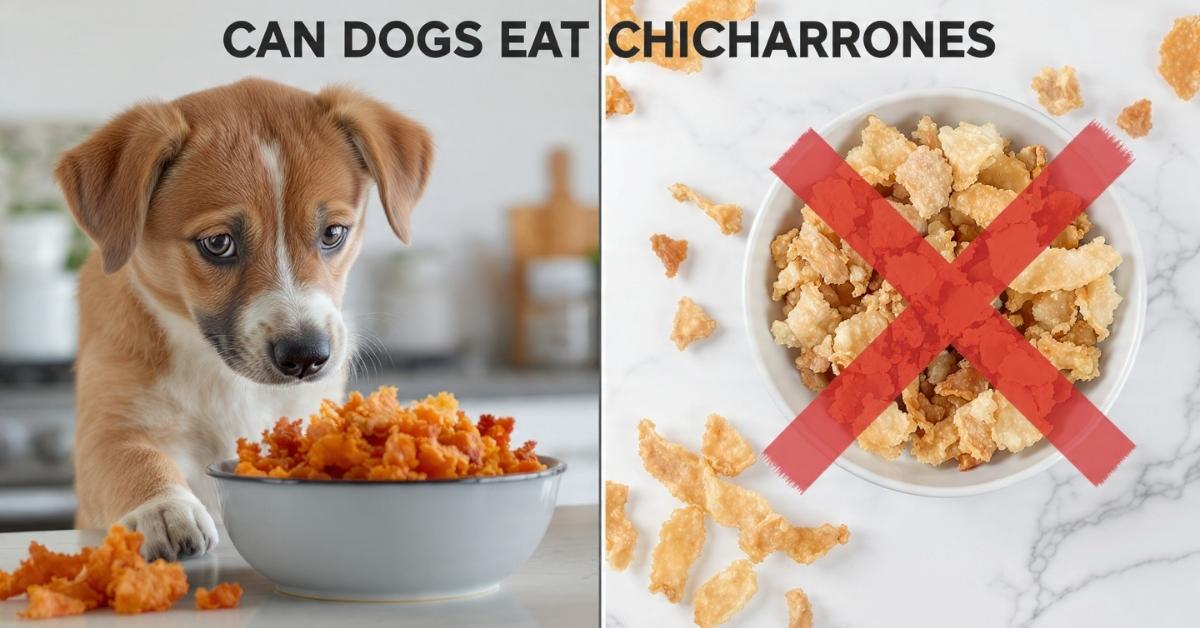
Can dogs eat chicharrones? If your dog just snatched a chicharron off your plate, you are probably asking this question in a panic. The short answer is no, chicharrones are not safe for dogs. While However,a single small piece is unlikely to cause a medical emergency, these deep-fried pork rinds are loaded with salt, fat, and seasonings that can seriously harm your dog’s health. Dr. Sarah Mitchell, DVM, puts it plainly: “I see at least two or three cases every month where a dog is brought in after eating fried human snacks like chicharrones.
The combination of salt and fat is genuinely dangerous especially for smaller breeds. My advice is simple: keep all fried snacks completely out of your dog’s reach, no exceptions.” In this complete 2026 guide, we cover exactly why chicharrones are dangerous, what happens if your dog eats them, and the best safe crunchy alternatives your dog will love.
Medically Reviewed by Dr. Sarah Mitchell, DVM | Last Updated: May 18, 2026
Disclaimer: This article is for informational purposes only and does not replace professional veterinary advice. If your dog is in pain or distress, contact your nearest vet clinic immediately.
What Are Chicharrones? Understanding the Ingredients
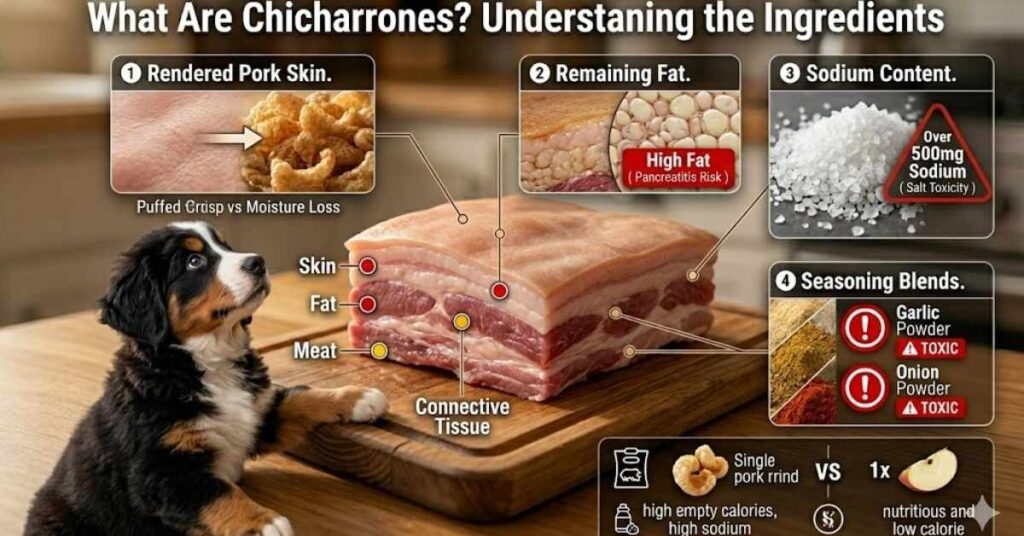
Before understanding why chicharrones are bad for dogs, it helps to know what they actually contain.
Chicharrones are deep-fried pork rinds or pork belly pieces that are popular across Latin America, the Philippines, and increasingly across the United States. They are made by rendering pork skin or pork belly in boiling oil until they puff up into a crispy, crunchy snack.
A typical serving of chicharrones contains:
| Ingredient | Amount Per 28g Serving | Risk to Dogs | Why It Matters |
| Fat | 9 grams | 🔴 Very High | Triggers pancreatitis even in one meal |
| Sodium (Salt) | 515mg | 🔴 Extremely High | 5x daily safe limit for small dogs |
| Protein | 17 grams | 🟡 OK in small amounts | Safe alone but not combined with salt and fat |
| Seasoning/Spices | Variable | 🔴 Often Toxic | Garlic/onion powder destroys red blood cells |
| Calories | 160 kcal | 🔴 High | Half a day’s calories for a small dog |
For a small 5kg dog, 515mg of sodium in a single serving is already nearly double their entire recommended daily sodium intake. This is why even one handful of chicharrones can cause visible symptoms in a small dog.
Can Dogs Eat Chicharrones? 5 Reasons They Are Dangerous
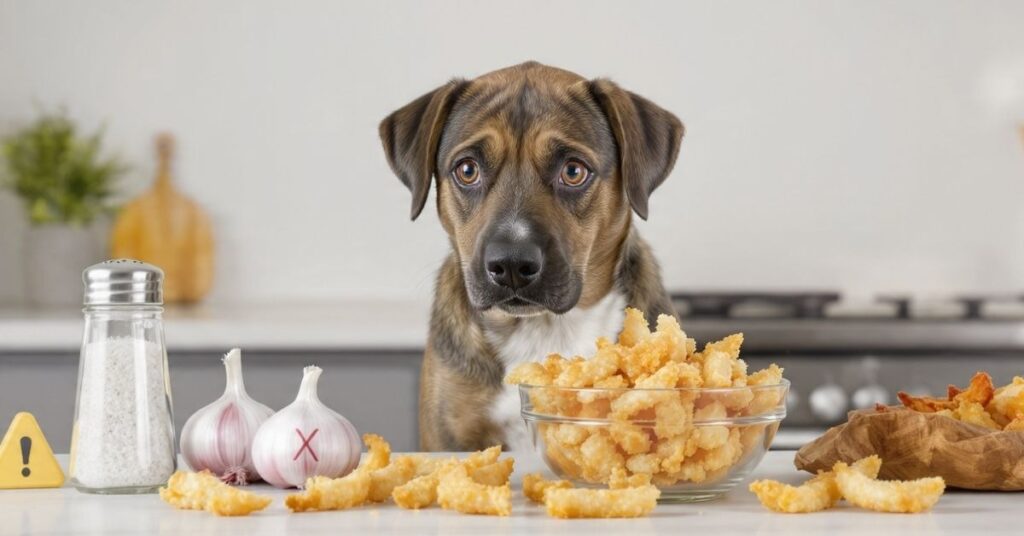
Reason 1 Extremely High Salt Content
Salt toxicity is one of the most underestimated dangers for dogs. According to the American Kennel Club, dogs should consume no more than 100mg of sodium per day for every 100 calories they eat. A single serving of chicharrones contains over 500mg of sodium five times the safe daily limit for most small dogs.
Salt toxicity in dogs causes excessive thirst, frequent urination, vomiting, diarrhea, and in severe cases, neurological symptoms including seizures and brain swelling.
Reason 2 Dangerously High Fat Content
Chicharrones are deep fried in oil, making them one of the fattiest snacks available. High-fat foods are the leading cause of pancreatitis in dogs, a painful and potentially fatal inflammation of the pancreas. According to Pet MD, even a single high-fat meal can trigger acute pancreatitis in susceptible dogs.
Breeds particularly at risk include Miniature Schnauzers, Cocker Spaniels, and Yorkshire Terriers; these dogs are genetically predisposed to pancreatitis and should never be given fried foods of any kind.
Reason 3 Toxic Seasonings and Spices
Plain chicharrones are rare. Most commercial and homemade versions are seasoned with ingredients that are directly toxic to dogs:
| Seasoning | Toxic to Dogs? | Effect |
| Garlic powder | 🔴 YES — Very Toxic | Destroys red blood cells |
| Onion powder | 🔴 YES — Very Toxic | Causes hemolytic anemia |
| Chili powder | 🔴 YES — Irritant | Burns digestive tract |
| Paprika | 🔴 YES — Irritant | Causes vomiting and diarrhea |
| Black pepper | 🟡 Mild irritant | Upsets stomach |
| Salt | 🔴 YES — Toxic in high doses | See Reason 1 above |
Even a small amount of garlic or onion powder can cause serious damage to a dog’s red blood cells. For more on toxic foods, read our complete guide on Can Dogs Eat Chocolate?
Reason 4 Choking and Digestive Blockage Risk
The hard, crunchy texture of chicharrones can splinter into sharp pieces when chewed. These sharp fragments can scratch the inside of your dog’s throat, stomach lining, or intestines. In small dogs and puppies, large pieces of chicharron can cause a complete intestinal blockage requiring emergency surgery.
Reason 5 Empty Calories Leading to Obesity
Furthermore Chicharrones provide almost no nutritional value to dogs beyond fat and protein. Regular consumption contributes to rapid weight gain, obesity, joint problems, and a shortened lifespan. A single chicharron can contain as many calories as an entire small dog treat designed for all-day nutrition.
What Happens If a Dog Eats Chicharrones? Symptoms to Watch For
If your dog ate chicharrones, watch for these symptoms based on how much they consumed:
They Ate Just 1-2 Small Pieces:
- Mild thirst increase
- Soft stool or mild diarrhea
- Slight lethargy
If They Ate a Handful or More:
- Excessive thirst and urination
- Vomiting
- Diarrhea
- Bloating and abdominal pain
- Lethargy and weakness
🚨 Emergency Symptoms Call Vet Immediately:
- Seizures or trembling
- Extreme bloating
- Inability to stand
- Blood in vomit or stool
- Collapse
What to Do If Your Dog Eats Chicharrones 5 Emergency Steps
1:Check How Much Was Eaten
One small piece is very different from a full bag. Note the approximate amount and check the packaging for garlic or onion powder in the ingredient list.
2: Check for Toxic Seasonings
If the chicharrones contain garlic powder or onion powder, contact your vet immediately regardless of the amount eaten. These ingredients are toxic even in small doses.
3: Monitor Closely for 24 Hours
If the chicharrones were plain and only a small amount was consumed, monitor your dog at home for vomiting, diarrhea, or lethargy.
4: Provide Fresh Water
The high salt content will make your dog very thirsty. Make sure fresh water is always available but do not force them to drink excessively.
5: Contact Your Vet
If symptoms appear or if seasoned chicharrones were consumed in any amount, call your vet or contact:
🚨 ASPCA Animal Poison Control: (888) 426-4435 🚨 Pet Poison Helpline: (855) 764-7661
Can Dogs Eat Any Type of Chicharrones?
| Type | Safe for Dogs? | Reason |
| Plain unseasoned chicharrones | 🟡 One tiny piece only | High fat and salt still present |
| Spicy chicharrones | 🔴 Never | Chili causes severe digestive burn |
| Garlic/onion seasoned | 🔴 Never | Directly toxic to dogs |
| Chicharrones de harina (flour) | 🔴 No | High salt, empty calories |
| Homemade unseasoned pork rind | 🟡 Tiny amount only | Still high fat pancreatitis risk |
The honest truth is that no version of chicharrones is genuinely safe or beneficial for dogs. Even plain versions carry enough fat and salt to cause problems with regular exposure.
5 Safe Crunchy Alternatives Your Dog Will Love
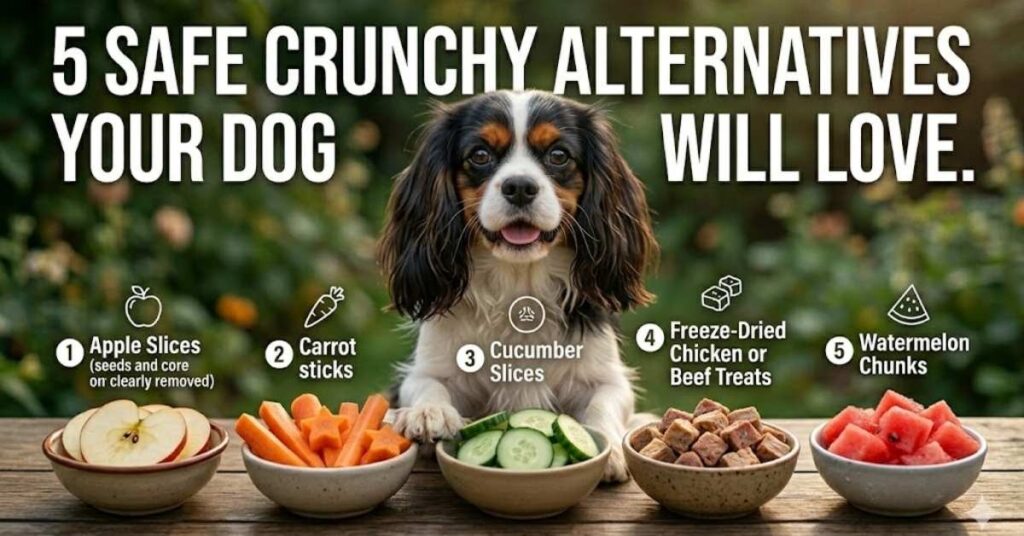
Your dog loves the crunch, not the chicharron itself. Here are completely safe alternatives:
1. Apple Slices are crunchy, sweet, and completely safe for dogs. Remove seeds and core before serving. Read our complete guide on Can Dogs Eat Apples?
2. Carrots One of the best crunchy treats for dogs. Low calorie, high fiber, and great for dental health. Most dogs love the satisfying crunch of a raw carrot.
3. Cucumber Slices Extremely low calorie and perfectly safe. Dogs enjoy the crunch and mild flavor. Read our guide on Can Dogs Eat Cucumber?
4. Freeze-Dried Chicken or Beef Treats Available at pet stores these give dogs the meaty flavor they crave in a safe, low-sodium format.
5. Watermelon Chunks Surprisingly crunchy when cold and completely safe for dogs with seeds removed. Read our guide on Can Dogs Eat Watermelon?
Frequently Asked Questions
1. Can dogs eat chicharrones in small amounts? A single tiny plain piece of chicharron is unlikely to cause a medical emergency in a healthy adult dog. However, even small amounts of seasoned chicharrones containing garlic or onion powder are dangerous regardless of quantity. There is no truly safe amount safer alternatives exist that give your dog the crunch they enjoy without the health risks.
2. My dog ate a whole bag of chicharrones. What do I do? Contact your vet or the ASPCA Poison Control Center at (888) 426-4435 immediately. A full bag of chicharrones contains enough sodium and fat to cause serious salt toxicity and acute pancreatitis in most dogs. Do not wait for symptoms to appear before calling.
3. Can dogs eat pork rinds? Pork rinds and chicharrones are essentially the same thing — fried pork skin. The same risks apply. Plain unseasoned pork rinds carry high fat and salt, while seasoned versions add toxic ingredients like garlic and onion powder. Neither is safe for regular consumption.
4. Are chicharrones de harina safe for dogs? Chicharrones de harina are wheat flour-based fried snacks rather than pork skin. While they do not carry the same meat-based risks, they are still extremely high in salt, oil, and artificial flavoring. They offer zero nutritional benefit to dogs and should be avoided entirely.
5. Can puppies eat chicharrones? No. Puppies have significantly more sensitive digestive systems than adult dogs. Even a small amount of chicharrones can cause severe vomiting, diarrhea, and dehydration in a puppy. Keep all fried snacks completely away from puppies at all times.
6. What are the signs of salt toxicity in dogs after eating chicharrones? Signs of salt toxicity include excessive thirst, frequent urination, vomiting, diarrhea, loss of coordination, muscle tremors, and in severe cases, seizures. If you notice any of these signs after your dog eats chicharrones, contact your vet immediately at (888) 426-4435.
7. Can dogs eat chicharrones if they are homemade without seasoning? Homemade plain chicharrones without any seasoning are slightly less dangerous than commercial versions, but they are still deep-fried in oil and extremely high in fat. Even without seasoning, the fat content alone is enough to trigger pancreatitis in susceptible dogs. A safer option is to offer your dog plain boiled chicken as a high-protein treat instead.
Conclusion:
The answer is clear: dogs should not eat chicharrones. These deep-fried pork rinds are packed with dangerous amounts of salt, fat, and toxic seasonings that can cause everything from mild digestive upset to life-threatening pancreatitis and salt toxicity.
If your dog ate a small plain piece, monitor them closely for 24 hours. If they ate seasoned chicharrones or a large amount, contact your vet immediately at (888) 426-4435. Most importantly, replace chicharrones with one of the five safe crunchy alternatives listed above your dog will enjoy the crunch just as much without any of the risks.
For more expert dog safety and nutrition guides, explore our complete series:
- Can Dogs Eat Chocolate?
- Can Dogs Eat Grapes? TOXIC
- Can Dogs Have Palm Oil?
- What Happens If a Dog Eats Gum?
- Can a Dog Break Its Tail?
Did this guide help you? Share it with fellow dog owners and drop your questions in the comments below!

Farhan Imran is the founder and lead editor of PetExpertly. With a background in managing pet-focused digital platforms like PurePawsLife, he is dedicated to researching and sharing the most reliable pet care advice. His goal is to help pet owners make informed decisions through well-researched guides