


Can dogs eat beef tallow? Now that the ancestral fat movement is firmly established in mainstream pet nutrition, many dog owners are asking whether this rendered animal fat is safe or even beneficial for their dogs. The answer is yes. In small controlled amounts, beef tallow can offer genuine health benefits for dogs.
However, too much can cause serious digestive problems and even pancreatitis. Dr. Sarah Mitchell, DVM, explains: “Beef tallow from grass-fed sources is genuinely one of the better fat supplements you can add to a dog’s diet, but only in the right amounts. I always tell my clients to start with a quarter of the recommended dose for the first two weeks. The digestive system needs time to adjust, and rushing it is where most owners run into problems.” In this complete 2026 guide, we cover the exact benefits, the real risks, safe serving sizes by dog weight, and how to use beef tallow correctly for your dog.
Medically Reviewed by Dr. Sarah Mitchell, DVM | Last Updated: May 18, 2026
Disclaimer: This article is for informational purposes only and does not replace professional veterinary advice. If your dog is in pain or distress, contact your nearest vet clinic immediately.
Can Dogs Eat Beef Tallow? What Is This Ancient Fat?

Beef tallow is rendered fat from cattle, specifically the fat surrounding the kidneys and organs, known as suet. When slowly cooked down, this fat becomes a stable cooking oil that has been used for thousands of years by both humans and their animals.
Unlike processed vegetable oils, beef tallow closely matches the ancestral fat sources dogs consumed in the wild:
| Property | Beef Tallow | Palm Oil | Vegetable Oil |
| Saturated Fat | High (50%) | Very High (82%) | Low |
| Omega-3 Content | Moderate | None | Very Low |
| Processing Level | Minimal | Highly processed | Highly processed |
| Ancestral Diet Match | Yes | No | No |
| Safe for Dogs | In moderation | Risky | Risky |
In the wild, dogs and wolves instinctively consume organ fat when hunting prey. Beef tallow closely matches this ancestral fat source, which is why many raw diet advocates include it in canine nutrition plans. For more on which fats are dangerous for dogs, read our complete guide on Can Dogs Have Palm Oil?
Can Dogs Eat Beef Tallow? 5 Genuine Health Benefits
Benefit 1: Beef Tallow Supports a Healthy Coat and Skin
Beef tallow is rich in fat-soluble vitamins, particularly Vitamin E and Vitamin K, which directly support skin cell regeneration and a shiny, healthy coat. Many raw-fed dog owners report visible improvement in coat quality within 2 to 4 weeks of adding small amounts of beef tallow to their dog’s diet.
Benefit 2: Beef Tallow Provides Long-Lasting Energy
Unlike carbohydrates that cause blood sugar spikes, the saturated fats in beef tallow provide slow-burning, sustained energy. This makes it particularly beneficial for working dogs, active breeds, and dogs recovering from illness who need calorie-dense nutrition.
Benefit 3: Beef Tallow Supports Joint Health
Beef tallow contains conjugated linoleic acid (CLA) and omega fatty acids that support joint lubrication and reduce inflammation. According to Dogs Naturally Magazine, animal fats from grass-fed sources contain higher levels of anti-inflammatory omega-3 fatty acids that directly benefit aging dogs with arthritis.
Benefit 4: Beef Tallow Improves Food Palatability
Adding a small amount of melted beef tallow to dry kibble dramatically increases palatability. This is especially useful for picky eaters, senior dogs with reduced appetite, or dogs recovering from illness who are reluctant to eat. For more on healthy food options for dogs, read our guide on Can Dogs Eat Apples?
Benefit 5: Beef Tallow Works as a Natural Topical Skin Treatment
Pure beef tallow can be applied topically to a dog’s dry, cracked paw pads or nose. Its composition closely matches the natural oils in mammalian skin, making it an effective moisturizer that is also completely safe if licked.
The Real Risks: When Can Dogs Eat Beef Tallow Safely?
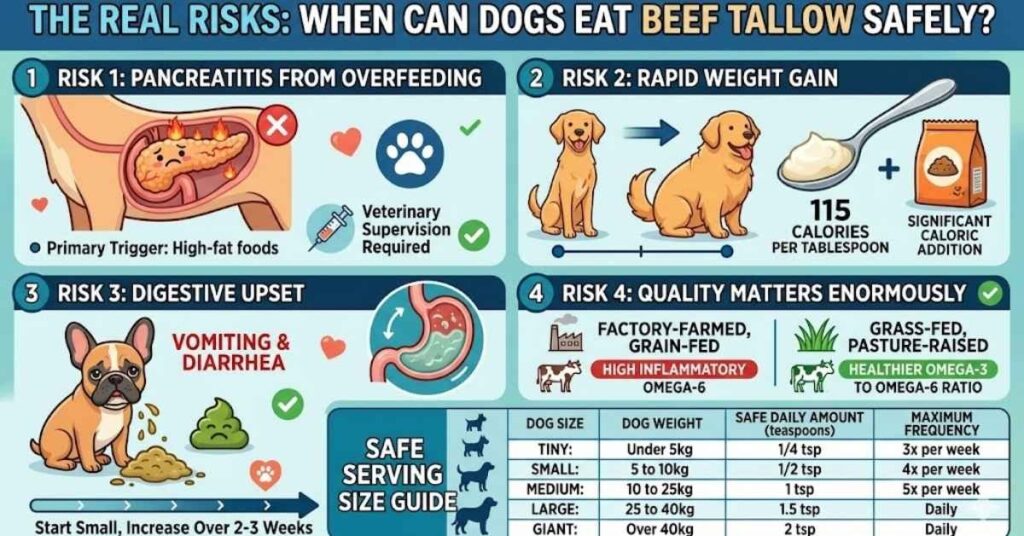
While beef tallow has genuine benefits, it must be used carefully. Here are the real risks every dog owner must understand before feeding can dogs eat beef tallow.
Risk 1: Pancreatitis From Overfeeding
The biggest risk is feeding too much too quickly. High-fat foods are the primary dietary trigger for pancreatitis in dogs. According to Pet MD, breeds like Miniature Schnauzers, Cocker Spaniels, and Yorkshire Terriers are especially vulnerable and should only receive the smallest possible amounts under veterinary supervision.
Risk 2: Rapid Weight Gain
Beef tallow is extremely calorie-dense. Just one tablespoon contains approximately 115 calories. For a small 5kg dog whose daily caloric needs are only 300 to 400 calories, even half a tablespoon represents a very significant caloric addition that can lead to rapid weight gain.
Risk 3: Digestive Upset When Introduced Too Quickly
Dogs not accustomed to high-fat foods will experience vomiting and diarrhea if beef tallow is introduced too quickly. Always start with the smallest possible amount and increase gradually over 2 to 3 weeks to allow the digestive system to adapt properly.
Risk 4: Quality Matters Enormously
Not all beef tallow is equal. Tallow from factory-farmed, grain-fed cattle is higher in inflammatory omega-6 fatty acids. Tallow from grass-fed, pasture-raised cattle has a much healthier omega-3 to omega-6 ratio. Always choose grass-fed beef tallow for your dog whenever possible.
How Much Beef Tallow Can Dogs Eat? Safe Serving Size Guide
| Dog Size | Dog Weight | Safe Daily Amount | Maximum Frequency |
| Tiny | Under 5kg | 1/4 teaspoon | 3x per week |
| Small | 5 to 10kg | 1/2 teaspoon | 4x per week |
| Medium | 10 to 25kg | 1 teaspoon | 5x per week |
| Large | 25 to 40kg | 1.5 teaspoons | Daily |
| Giant | Over 40kg | 2 teaspoons | Daily |
Always start with half the recommended amount for the first 2 weeks and increase gradually. If any digestive upset occurs, reduce the amount immediately and consult your vet.
Grass-Fed vs Regular Beef Tallow: Which Is Safer for Dogs?
| Factor | Grass-Fed Tallow | Regular Tallow |
| Omega-3 Content | Higher, anti-inflammatory | Lower |
| Omega-6 Content | Balanced ratio | Higher, pro-inflammatory |
| Vitamin E and K | Higher levels | Lower levels |
| Pesticide Exposure | Minimal | Higher risk |
| Recommended for Dogs | Yes, first choice | Use sparingly only |
For your dog’s health, always choose certified grass-fed beef tallow when possible. The nutritional difference is significant and directly impacts your dog’s inflammatory response and long-term health.
How to Use Beef Tallow for Dogs: 4 Safe Methods
Method 1: Drizzle Over Kibble Melt 1/4 to 1/2 teaspoon of beef tallow and drizzle it warm over your dog’s regular kibble. This dramatically improves palatability and adds beneficial fats to a dry food diet.
Method 2: Mix Into Raw Food If you feed a raw diet, add the appropriate serving size of beef tallow directly to the bowl and mix well before serving.
Method 3: Homemade Frozen Dog Treats Mix melted beef tallow with plain boiled chicken and pour into ice cube trays. Freeze overnight and serve as a high-value treat on hot days. Your dog will love it.
Method 4: Topical Paw Balm Apply a small amount of pure beef tallow directly to dry, cracked paw pads or a dry nose. It absorbs quickly and is completely safe if licked.
Signs Your Dog Had Too Much Beef Tallow
Watch for these symptoms if you think you gave your dog too much beef tallow:
- Vomiting within 2 to 4 hours of eating
- Watery or greasy diarrhea
- Loss of appetite the following day
- Hunched back position indicating abdominal pain
- Extreme lethargy and weakness
If you notice these signs, stop giving beef tallow immediately, provide plenty of fresh water, and contact your vet. For more on fat-related risks in dogs, read our guide on Can Dogs Have Palm Oil?
FAqs
1. Can dogs eat beef tallow every day? Yes, but only for large and giant breeds as outlined in the serving guide above. For smaller dogs, it is safer to limit beef tallow to 3 to 4 times per week to prevent excessive caloric intake and reduce the risk of digestive strain. Always follow the weight-based serving size table and introduce it gradually over 2 weeks.
2. Can puppies have beef tallow? It is not recommended. Puppies have incredibly sensitive developing digestive systems and strict nutritional requirements. Adding heavy fats can easily disrupt their calcium-to-phosphorus ratios or cause severe diarrhea. Stick to formulated puppy food and always consult your vet before adding any fat supplements to a puppy’s diet.
3. Is beef tallow better than coconut oil for dogs? Both have genuine benefits, but beef tallow more closely matches a dog’s ancestral diet. Coconut oil is high in medium-chain triglycerides which provide quick energy, while beef tallow provides longer-lasting energy and more fat-soluble vitamins. Most canine nutritionists consider grass-fed beef tallow the superior option for overall long-term health.
4. Can dogs eat beef tallow that has been used for cooking? No. Used cooking tallow absorbs flavors, seasonings, and potentially toxic compounds from whatever was cooked in it. Always give your dog fresh, unused beef tallow only. Never give your dog pan drippings or used cooking fat of any kind.
5. Can dogs eat beef tallow if they have pancreatitis? No. Dogs with a history of pancreatitis should avoid all high-fat foods including beef tallow unless specifically approved by their veterinarian. Even small amounts of additional dietary fat can trigger a painful and dangerous relapse in pancreatitis-prone dogs.
6. Where can I buy beef tallow for my dog? Look for certified grass-fed beef tallow at health food stores, organic butchers, or online retailers. Always ensure the product contains only one ingredient, which is rendered beef fat, with no added salt, seasonings, or preservatives of any kind.
7. Can dogs eat beef tallow skin or suet directly? Raw suet, which is the unrendered kidney fat, can be given to dogs in small amounts, but it carries a higher risk of bacterial contamination than properly rendered tallow. Rendered grass-fed beef tallow is always the safer and cleaner choice for your dog.
Conclusion:
Yes. When used correctly, beef tallow is one of the most ancestrally appropriate fats you can add to your dog’s diet. Small controlled amounts of grass-fed beef tallow support coat health, joint function, sustained energy, and food palatability. The key is always moderation. Follow the serving size guide, choose grass-fed sources, introduce gradually, and watch closely for any signs of digestive upset.
For more expert dog nutrition and safety guides, explore our complete series:
- Can Dogs Have Palm Oil?
- Can Dogs Eat Chocolate?
- Can Dogs Eat Grapes?
- What Happens If a Dog Eats Gum?
- Can Dogs Eat Chicharrones?
- Can Dogs Eat Apples?
Did this guide help you? Share it with fellow dog owners and drop your questions in the comments below!

Farhan Imran is the founder and lead editor of PetExpertly. With a background in managing pet-focused digital platforms like PurePawsLife, he is dedicated to researching and sharing the most reliable pet care advice. His goal is to help pet owners make informed decisions through well-researched guides