


Are you baking homemade dog treats and wondering if dogs can eat coconut flour safely? You are not alone. Thousands of dog owners search this exact question every month.
Yes, dogs can eat coconut flour. It is one of the healthiest flour alternatives available for homemade dog treats. But there are important rules about how much to give, which dogs should avoid it, and exactly how to use it safely.
In this vet-reviewed guide, we cover everything you need to know about coconut flour for dogs benefits, risks, safe amounts by breed size, and 3 easy homemade treat recipes your pup will love.
📋 Quick Answer Is Coconut Flour Safe for Dogs?
- ✅ YES coconut flour is safe for dogs in moderation
- ✅ Healthy Profile It is gluten-free, grain-free, and low glycemic
- ✅ Diet Friendly Safe for dogs with wheat allergies or diabetes
- ⚠️ Digestive Warning Too much can cause digestive upset always start small
- ⚠️ Feeding Warning Never feed raw coconut flour directly always baked into treats
What Is Coconut Flour?
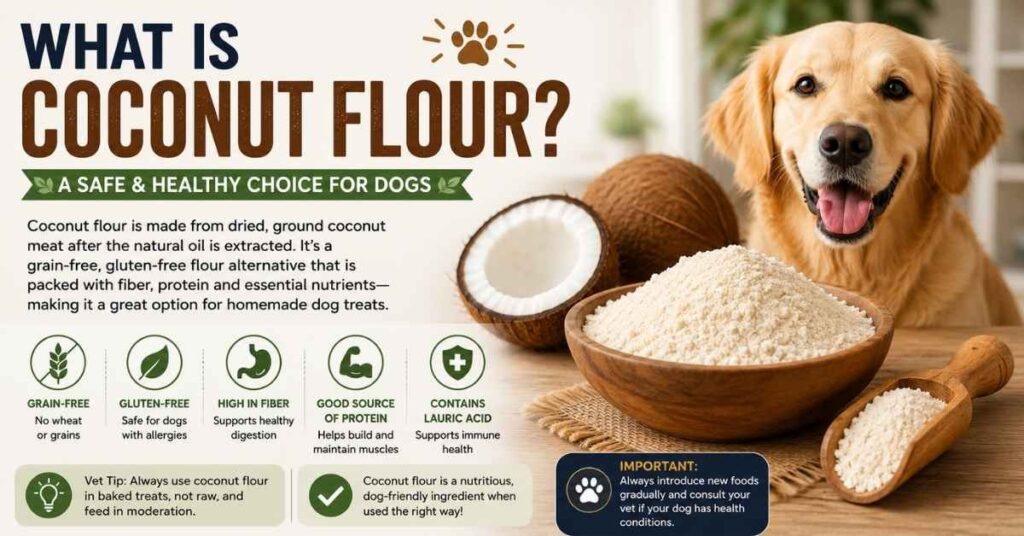
Coconut flour is made from dried, ground coconut meat and the white flesh inside a coconut. After most of the oil is extracted, the remaining pulp is dried and ground into a fine powder. Unlike regular wheat flour, coconut flour has a very different nutritional profile that makes it particularly suitable for dogs.
| Property | Coconut Flour | Regular Wheat Flour |
| Gluten-Free | ✅ Yes | ❌ No |
| Grain-Free | ✅ Yes | ❌ No |
| Glycemic Index | ✅ Low (35) | ❌ High (70+) |
| Fiber Content | ✅ Very High (38g/100g) | 🟡 Moderate (3g/100g) |
| Protein | ✅ Higher (19g/100g) | 🟡 Lower (10g/100g) |
| Safe for Allergies | ✅ Usually Yes | ❌ Often Problematic |
| Overall for Dogs | ✅ Excellent Choice | ❌ Less Ideal |
Is Coconut Flour Safe for Dogs?
| Question | Answer |
| Is coconut flour toxic to dogs? | ❌ No completely non-toxic (Source: ASPCA) |
| Can puppies eat coconut flour? | ✅ Yes very small amounts only |
| Can diabetic dogs eat it? | ✅ Yes low glycemic index (Source: AKC) |
| Can dogs with wheat allergies eat it? | ✅ Yes 100% gluten-free |
| Can dogs with pancreatitis eat it? | ⚠️ Consult your vet first |
| Safe serving amount | ✅ 1 tsp per 10 lbs body weight (baked in treats) |
5 Vet-Approved Health Benefits of Coconut Flour for Dogs
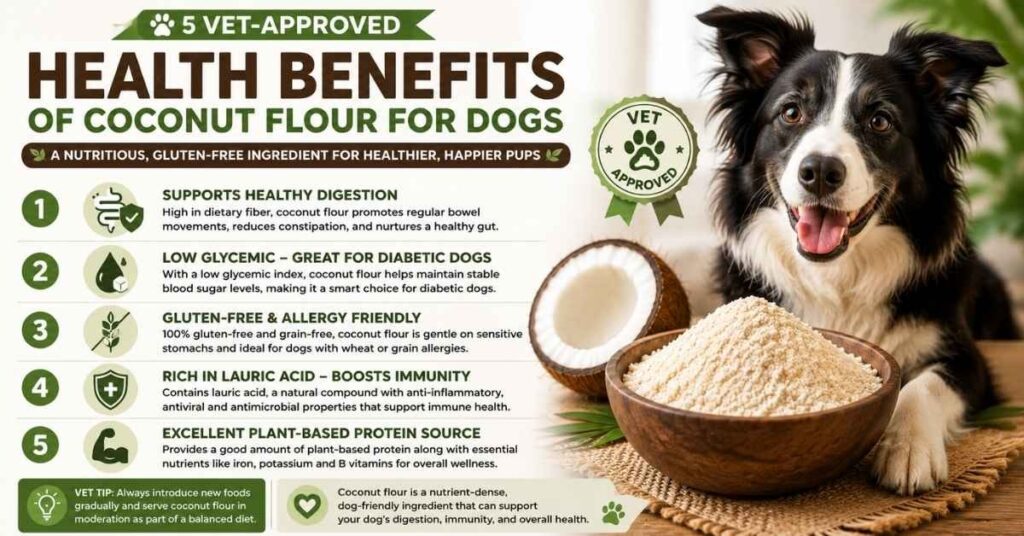
1. Supports Healthy Digestion
Coconut flour contains approximately 38 grams of dietary fiber per 100 grams significantly more than regular flour. According to PetMD, this high fiber content helps regulate bowel movements, reduce constipation, and support healthy gut bacteria in dogs. For dogs that struggle with irregular digestion, small amounts of coconut flour in treats can provide measurable improvement.
2. Safe for Diabetic Dogs Low Glycemic Index
With a glycemic index of approximately 35 compared to 70+ for regular wheat flour coconut flour does not cause sudden blood sugar spikes. The American Kennel Club (AKC) confirms that low-glycemic foods are beneficial for diabetic dogs and dogs that need weight management. Always consult your veterinarian before changing a diabetic dog’s diet.
3. Gluten-Free Ideal for Dogs With Allergies
Many dogs suffer from wheat and gluten sensitivities. Symptoms include chronic itchy skin, digestive upset, ear infections, and hot spots. Since coconut flour contains absolutely zero gluten and is grain-free, it is a completely safe baking ingredient for dogs with these sensitivities confirmed by veterinary nutritionists at Lord Jameson.
4. Rich in Lauric Acid Immune System Support
Coconut flour contains lauric acid, a medium-chain fatty acid with documented anti-inflammatory properties. Research cited by PetMD shows lauric acid helps support a dog’s immune system, promotes healthy brain function, and contributes to a shiny, healthy coat. It is the same beneficial compound found in coconut oil.
5. Excellent Plant-Based Protein Source
Unlike most flours, coconut flour provides approximately 19 grams of plant-based protein per 100 grams. This supports muscle maintenance in active dogs, senior dogs, and dogs recovering from illness. Combined with its iron, potassium, and vitamin B6 content, coconut flour is a genuinely nutritious baking ingredient.
Risks of Coconut Flour for Dogs What To Watch For
High Fiber Content and Digestive Upset
The most common risk with coconut flour is its extremely high fiber content. If your dog consumes too much coconut flour at once, it can cause gas, bloating, diarrhea, and stomach cramping. This is especially true if introduced too quickly. Always start with very small amounts and increase gradually over 7 to 10 days.
Calorie Density Watch Portions for Overweight Dogs
Coconut flour is calorie-dense. For overweight dogs or breeds prone to obesity (like Labrador Retrievers, Beagles, and Dachshunds), coconut flour treats should be counted as part of their daily calorie budget. One small biscuit is a treat not a meal supplement.
Warning Signs When to Call Your Vet
- Vomiting within 2 hours of eating coconut flour treats
- Severe diarrhea lasting more than 24 hours
- Bloating or a visibly distended stomach
- Lethargy or loss of appetite after eating
- Signs of allergic reaction hives, facial swelling, excessive scratching
- If your dog ate large amounts of raw coconut flour contact your vet immediately
How Much Coconut Flour Can Dogs Eat? Safe Amounts by Breed Size
The following amounts refer to coconut flour used in baked treats, not raw coconut flour fed directly to your dog.
| Dog Size | Weight | Safe Daily Amount (in treats) | Example Breeds |
| Extra Small | Under 10 lbs | 1/2 tsp per day | Chihuahua, Yorkshire Terrier |
| Small | 10 to 25 lbs | 1 tsp per day | Beagle, Pug, Shih Tzu |
| Medium | 25 to 50 lbs | 1.5 tsp per day | Border Collie, Bulldog |
| Large | 50 to 100 lbs | 2 tsp per day | Labrador, Golden Retriever |
| Extra Large | 100+ lbs | 1 tbsp per day | Great Dane, Mastiff |
💡 Vet Tip Introducing Coconut Flour for the First Time
- Week 1: Give just 1 small treat (about 1/4 of normal serving size)
- Week 2: Increase to half serving if no digestive issues observed
- Week 3+: Normal serving size as shown in the table above
- Always provide fresh water high fiber foods increase water needs
Source: Dr. Sarah Mitchell, DVM PetExpertly.com Veterinary Panel
3 Easy Vet-Approved Homemade Dog Treat Recipes Using Coconut Flour
1 Classic Coconut Flour Dog Biscuits

- Ingredients:
- 1 cup coconut flour
- 2 large eggs
- 1/4 cup xylitol-free peanut butter
- 1/4 cup water
- Instructions:
- Preheat oven to 350°F (175°C)
- Mix all ingredients into a firm dough
- Roll out to 1/4 inch thickness and cut into bone shapes
- Bake 20 to 25 minutes until golden brown
- Cool completely before serving to your dog
- Storage: Airtight container at room temp: 5 days | Fridge: 2 weeks | Freezer: 3 months
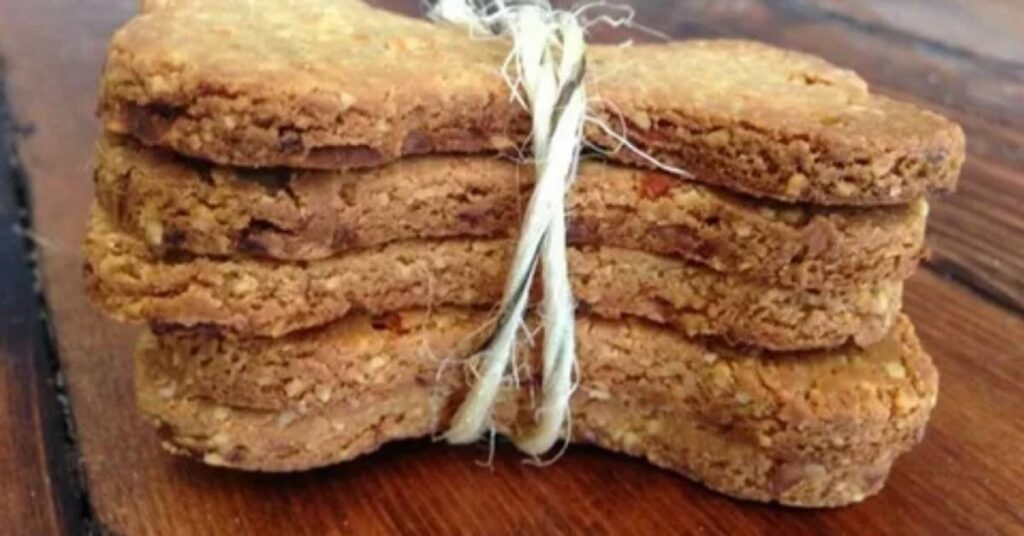
2 Coconut Flour Banana Bites
| Detail | Info |
| Ingredients | 1/2 cup coconut flour | 1 ripe banana mashed | 1 egg | 2 tbsp coconut oil |
| Instructions | Mix all | Roll into small balls | Bake 325°F for 15 min | Cool before serving |
| Storage | Fridge: 1 week | Freezer: 2 months |
| Why Dogs Love It | Natural sweetness from banana no added sugar needed |
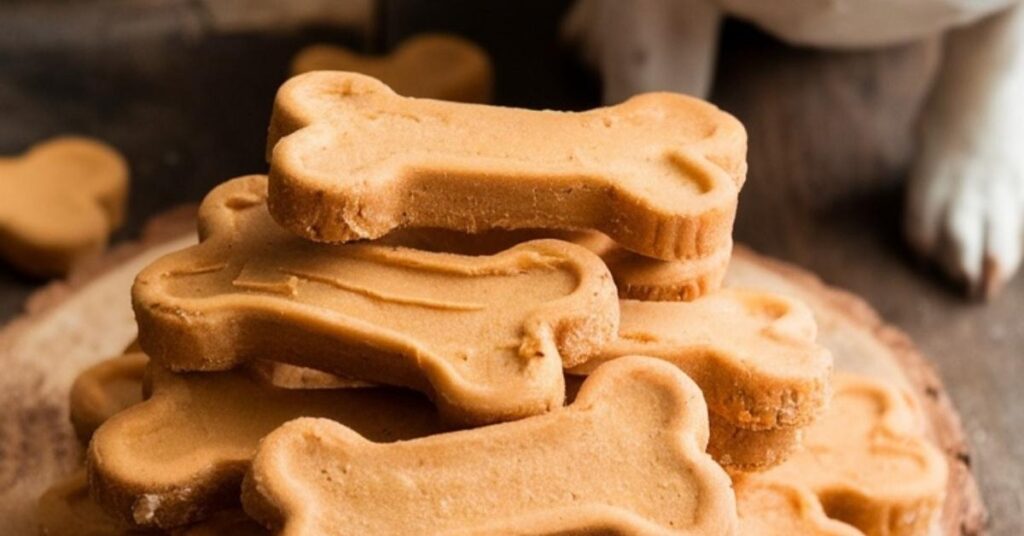
3 3-Ingredient Quick Treats (Easiest)
| Detail | Info |
| Ingredients | 1/4 cup coconut flour | 2 eggs | 1 tbsp coconut oil |
| Instructions | Mix all ingredients | Drop by teaspoon on baking sheet | Bake 350°F for 12 min |
| Storage | Airtight container: 4 days | Fridge: 10 days | Freezer: 2 months |
| Vet Note | Ideal starter recipe lowest fiber per treat, easiest on digestion. |
FQAS
Yes, puppies can eat coconut flour in very small amounts. Since puppies have sensitive digestive systems, start with one quarter teaspoon in a baked treat and monitor for 24 hours. According to the AKC, new foods should always be introduced gradually for puppies. Always consult your vet before introducing new foods to a puppy under 6 months old.
Technically it is not toxic, but raw coconut flour is strongly not recommended. It is extremely absorbent and expands when it absorbs moisture this can cause severe digestive discomfort and potentially dangerous blockages. Always use coconut flour baked into treats, never fed dry and raw. This is confirmed by veterinary nutritionists at PetMD.
If your dog ate a large amount of coconut flour (more than 3 tablespoons for a medium-sized dog), monitor them closely for the next 12 to 24 hours. Watch for vomiting, severe diarrhea, bloating, or lethargy. Ensure they have access to plenty of fresh water. If symptoms appear or worsen, contact your veterinarian or the ASPCA Animal Poison Control Center immediately.
No, these are three different products. Coconut flour is made from dried, ground coconut meat after oil extraction. Shredded coconut is simply grated coconut flesh with its natural fat content. Coconut oil is extracted fat with no fiber or protein. Coconut flour has a unique nutritional profile and is generally the safest option for baking dog treats.
Dogs with pancreatitis require a strictly low-fat diet. While coconut flour has lower fat content than coconut oil, it still contains some fat from the coconut meat. The American Kennel Club advises that dogs with pancreatitis should avoid any medium-chain fatty acids without veterinary guidance. Always consult your veterinarian before giving coconut flour treats to a dog with pancreatitis or any chronic health condition.
Conclusion:
Yes coconut flour is one of the best flour alternatives for homemade dog treats. It is gluten-free, grain-free, low glycemic, and packed with fiber, protein, and lauric acid. As confirmed by Dr. Sarah Mitchell DVM and supported by sources including AKC, PetMD, and ASPCA, coconut flour is completely safe for most dogs when used in moderation and baked properly.
Start with small amounts in baked treats, observe how your dog reacts, and consult your vet if your dog has diabetes, pancreatitis, or any chronic health condition.
Sources & References
- American Kennel Club (AKC) akc.org/expert-advice/nutrition Coconut for Dogs
- PetMD petmd.com Coconut Flour Nutritional Benefits for Dogs
- ASPCA Animal Poison Control aspca.org Non-Toxic Foods for Dogs
- Lord Jameson lordjameson.com Coconut Flour in Dog Treats (2026)
- MasterClass masterclass.com Types of Flour Safe for Dogs (2026)
Related Articles on PetExpertly
- Can Dogs Eat Cucumber? Vet-Approved Safe Guide
- Can Dogs Eat Watermelon? Seeds, Rind & Safe Amount
- Why Is My Dog Coughing? 7 Causes & When To See Vet

Farhan Imran is the founder and lead editor of PetExpertly. With a background in managing pet-focused digital platforms like PurePawsLife, he is dedicated to researching and sharing the most reliable pet care advice. His goal is to help pet owners make informed decisions through well-researched guides